
Dairy Processing Insulation Solutions
Engineered for Pasteurisers, CIP Systems, and Chilled Lines
Purpose-Built for Dairy Processing
Dairy processing runs two extremes at once. Hot pasteurisation and CIP (clean-in-place) cycles that need to hold precise temperatures, and chilled storage and transfer lines that need to stay cold and condensation-free. Every uninsulated surface in that mix is either bleeding heat it paid for or sweating moisture onto a food-contact environment where that’s a hygiene problem, not just an efficiency one.
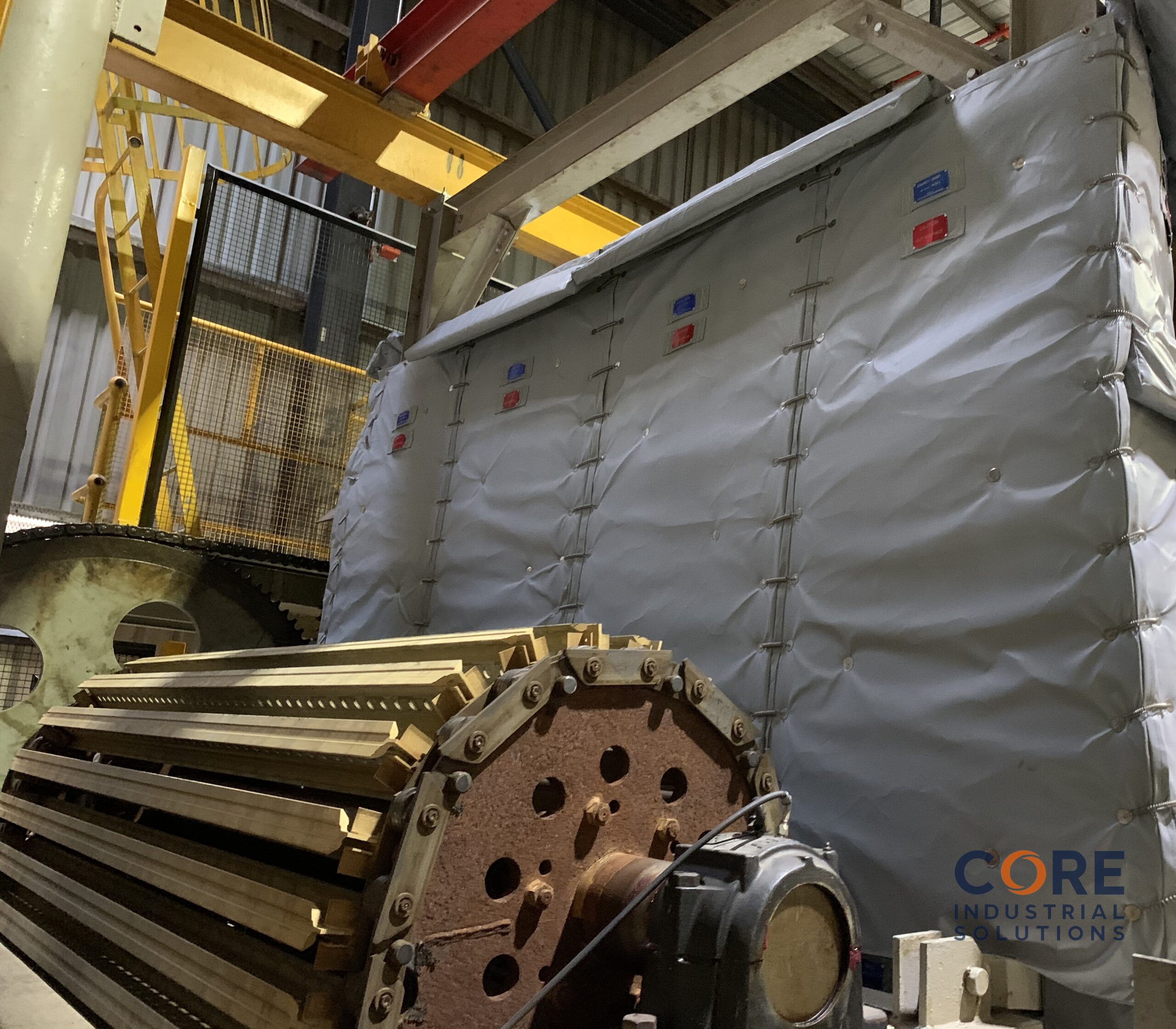
Core Industrial Solutions designs and fits custom removable insulation covers for dairy processing equipment, built to survive daily wash-down and repeated CIP cycles without trapping moisture, harbouring bacteria, or blocking the access your hygiene audits require.
Where Dairy Plants Lose Heat (and Gain Risk)
- Pasteurisers and heat exchangers — surfaces that cycle hot and cold all day are exactly where bare metal loses the most energy and suffers the most thermal fatigue.
- CIP systems — clean-in-place cycles run hot caustic and acid washes through pipework that’s frequently left bare, since standard insulation can’t handle repeated exposure to cleaning chemicals and heat.
- Chilled and cold transfer lines — uninsulated cold pipework sweats. That condensation doesn’t just waste cooling capacity, it creates the damp conditions where mould and bacteria thrive, right next to product-contact equipment.
- Steam distribution — valves, flanges and pipe runs around the plant are commonly the last thing insulated, and often the first thing removed for maintenance and never refitted.
Why Removable Insulation Works for Dairy
A dairy plant can’t run fixed, glued-down insulation the way a general industrial site might. Every CIP cycle, every hygiene audit, every maintenance check means equipment has to be opened up, inspected, and washed down, and standard insulation either has to be destroyed to get at the pipe or left in place where it becomes a hiding place for moisture and contamination. Our covers are built to be removed cleanly for cleaning and inspection, then refitted without damage or performance loss, so you keep full food-safety access without giving up the thermal benefit.
Proven in an Australian Dairy Plant
We’ve already delivered this for one of Australia’s major dairy producers. Carbon emissions cut from 334 tonnes a year down to just 4, and the project paid for itself in 13.5 months. Read the full Dairy Processing Plant case study →
Beyond the Energy Savings
- Improved site safety around hot pasteurisation and steam equipment
- Fewer equipment failures caused by repeated thermal cycling
- Lower workplace noise levels
- Reduced condensation risk on chilled and cold lines
- Supports corporate sustainability and emissions targets
- Stronger positioning for food-safety and hygiene audits
Frequently Asked Questions
Does insulating a dairy plant interfere with CIP cleaning cycles?
No. Our covers are removable by design, so CIP and wash-down cycles can still reach every surface that needs cleaning. The insulation comes off cleanly for inspection and goes back on without damage or lost performance.
Can insulation actually prevent condensation on cold and chilled lines?
Yes. Bare cold pipework sweats whenever there’s a difference between the line and ambient temperature, and that moisture is a real contamination risk in a food environment. Insulating those lines keeps the surface dry, which protects both the equipment and the hygiene standard of the space around it.
Is standard insulation safe to use in a food-grade or wash-down environment?
Not usually. Standard insulation materials absorb moisture, degrade under repeated chemical wash-down, and can become a place for bacteria to grow once damp. Ours is built specifically to handle CIP chemicals and daily wash-down without breaking down.
What parts of a dairy plant see the fastest return?
Pasteurisers, CIP pipework, and chilled transfer lines typically deliver the fastest payback, since they combine high energy throughput with surfaces that are usually left bare because of hygiene or access concerns.
How quickly does dairy insulation pay for itself?
Our dairy plant case study achieved payback in 13.5 months. Actual timing depends on your site’s current heat loss, energy costs, and how much of the plant is covered.
Do you provide ongoing support after installation?
Yes. Every installation includes a five-year health check program to assess performance, catch further efficiency opportunities, and keep the system compliant as standards evolve.
How We Help Dairy Processing Sites
Custom Engineered
Fitted to your specific pasteurisers, CIP skids, and line runs, not generic off-the-shelf wrap.
Hygiene Compliant
Materials and seams designed for wash-down, CIP chemical exposure, and food-safety inspection requirements.
Condensation Control
Insulating chilled lines reduces sweating that leads to moisture, corrosion, and mould risk on product-adjacent equipment.
Ready to enhance safety and efficiency?
Reach out and tell us what you need. Our team will listen, assess, and tailor a solution that delivers on energy savings, safety, and compliance.